
T1 & T2 Declaration Support
If a transit declaration is missing, incomplete or wrong, your goods don’t move – it’s that simple. With our transit declaration service, you get:
- Declarations prepared and lodged correctly every time, covering the right office, goods description, and guarantee level
- A team that tracks every movement through to confirmed discharge, so you’re never the one left chasing a closed-off status
- 40+ years of customs experience behind every shipment, whether it’s a single crossing or a regular multi-leg route
What is a T1 document?
A T1 document is a transit declaration used to move non-Union goods through one or more customs territories, with duty and import VAT suspended for the length of the journey, rather than paid at each border and reclaimed later.
“Non-Union” covers more than goods arriving from outside of the EU – it also includes goods made in Great Britain, since GB goods lose Union status once they leave. In practice, this means almost all transit movements starting in Great Britain will be T1.
Once lodged, a T1 is issued a Movement Reference Number (MRN) and a Transit Accompanying Document, which travels with the goods until the movement is formally closed off at the office of the destination. Until that happens, the liability for the goods sits with whoever requested the transit, which is why getting declaration right from the outset matters as much as getting the goods there.

When might you need a T1 document?
You will typically need a T1 in situations like:
- Moving goods from GB into or through the EU, where the shipment needs to reach an inland destination (or cross more than one country) before it’s actually cleared. A T1 lets it travel under one declaration instead of clearing customs at every border it passes.
- Your goods are heading somewhere before their final country or clearance. If a shipment needs to pass through one EU country to reach another, a T1 keeps it moving without triggering an import at the first border it hits.
- The buyer wants to handle clearance themselves, as their own premises or with their own broker, rather than have it cleared at the port of arrival.
- You’re moving high-value or high-volume shipments regularly, where the cashflow benefit of deferring duty and VAT until final clearance actually matters – rather than paying up front and reclaiming later.
- You don’t hold your own transit guarantee. A T1 can be raised under an agent’s guarantee, so you’re not required to secure HMRC authorisation of your own before you can move goods this way.
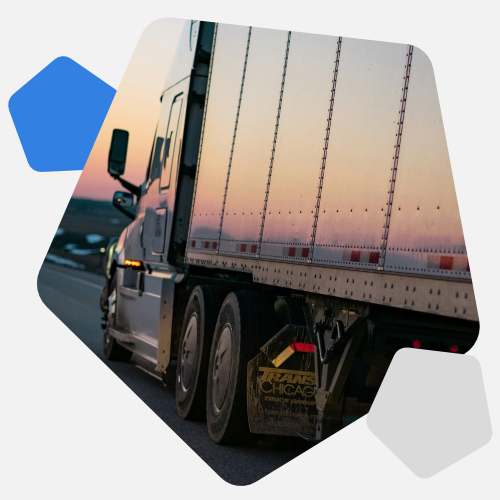
If any of that sounds like your shipment, the next question is usually less “do I need a T1” and more “who’s going to manage it properly.” That’s where we come in.
Our transit declaration service
We’ve been a family-run business since 1979, and transit is one of the areas where that hands-on approach counts most. We manage T1 and T2 transit declarations end to end – not just filing the paperwork, but making sure the movement closes properly.
Whether you’re sending a single shipment through the EU or managing regular multi-leg movements as part of your supply chain, we handle the declaration, the detail, and the follow-through.
That starts with getting the declaration right: filed on NCTS Phase 6 (live across the UK since 1st June 2026), with the correct office of departure, the right goods description and commodity codes, and a guarantee level that covers what you’re shipping. Once it’s lodged, you’ll have an MRN and Transit Accompanying Document ready to travel with the goods.
But the part that protects you is what happens after that – making sure the movement is discharged at the office of destination within the time limit, not just assuming it will be. If movement isn’t closed off properly, customs will come looking for proof it arrived, and the liability sits with whoever requested the transit in the first place. We watch that through to completion, so you’re not the one finding out weeks later that something never closed.
For businesses moving goods regularly rather than as a one-off, this is where the ongoing side of what we do matters most – we get to know your routes and your patterns, so recurring movements get faster and more consistent over time, instead of treated as a fresh problem every time.

Why work with BGM on transit
We’ve been handling customs work for businesses since 1979, and transit documents are just one more part of getting your goods where they need to go, without the hassle.

40+ years of experience
Family-run, since 1979

No guarantee needed
We handle transit through our trusted partner network, so you’re not tied up securing your own

NCTS Phase 6
Filing on the current system, not outdated ones
T1 vs T2 documents
Both are transit declaration lodged in the same system, but the difference comes down to the customs status of the goods, not the route they’re taking:
T1 covers non-Union goods
Anything that hasn’t been released into free circulation within the customs territory it’s crossing. This includes goods made outside of the EU, and goods made in Great Britain, since GB goods use Union status once they leave. Almost all transit movements starting in Great Britain will be T1.
T2 covers Union goods
Shipments that already hold EU status and need to keep that status while passing through a non-EU country. The classic example is the landbridge: an EU-origin shipment travelling from mainland Europe, through the UK, to Ireland. T2 exists so those goods aren’t accidentally treated as an import into the UK and export back out.
There are also less common variants: T2F, for example, applies to movements involving special fiscal territories like the Canary Islands. If your shipments involve anything outside the standard T1/T2 picture, that’s exactly the kind of detail worth checking with us before the goods move.
What you need to create a T1/T2 transit document
Send over these details and we’ll take it from there. The faster and more complete this is, the faster we can get your declaration lodged – and the less back-and-forth for you once it’s with us:
- Commercial invoice, including a full and accurate description of the goods (not just product codes)
- Packing list with quantities, weights, and how the shipment is packed
- Consignor and consignee details, including EORI numbers where applicable
- Commodity codes for everything in the shipment
- Departure and destination details: the departure office code, transit code and the final destination code – for example, if you are travelling Dover – Calais you will need to provide the codes (GB000060 to FR620001) and the code for the final destination.
- Route information: particularly if the shipment is passing through more than one country before reaching its final destination. For example GB,BE,NL,DE,DK,SE.
- Vehicle and haulier details, where relevant
Once we’ve got this from you, checking it over is on us. We cross reference everything, catching mismatched weights or vague descriptions before they become a hold up at the border. That’s the part most businesses don’t have the time or inclination to do themselves shipment after shipment, which is the part we take off your hands.

Common transit problems
Mismatched or incomplete documentation
The commercial invoice, packing list, and declaration need to agree with each other – mismatched weights, quantities or goods descriptions are one of the most common reasons a movement gets held up or challenged at a border. We cross-check this before anything’s lodged, so it’s caught on our side and not found out at a border.
The wrong office of destination
The office of destination has to be an approved one, and it has to match where the goods are actually going. Get this wrong, and a driver can end up somewhere that simply can't process the arrival – which means the movement can't be discharged, regardless of whether the goods themselves are fine. We confirm the correct office before the moment is even raised, so this isn’t something you need to check yourself.
A guarantee that doesn't cover the shipment's value
Every movement needs enough guaranteed headroom to cover the duty and VAT at risk. A guarantee that’s fine for most journeys can fall short on one high-value shipment – we check this before it moves, so it’s never something you find out the hard way.
The transit not being discharged in time
Getting the MRN issued is the easy part: the movement isn't finished until it's confirmed as arrived and closed off at the destination. If that confirmation doesn’t come through, the office of departure will open an enquiry, and left unresolved, this can mean the guarantee being drawn on a customs debt raised against whoever requested the transit. We track this through to confirmed discharge, so you’re not the one keeping tabs on whether it’s actually closed.
Missing documents
The Transit Accompanying Document needs to be with the shipment at every stage. If it’s missing, the goods can be held regardless of whether the underlying declaration was correct. We make sure it’s issued and in the right hands before the goods move. This is part of the transit that causes the most disruption when it goes wrong, but it’s also the part that’s easiest to get right with the correct oversight. This is exactly what we manage on your behalf, from the declaration through to the confirmed discharge.
Talk to us about your transit requirements
Whether you’re moving a single shipment through the EU or managing regular multi-leg movements as part of your supply chain, we’ll make sure it’s declared correctly and followed through to a proper close. Get in touch to talk through your route, and we’ll tell you exactly what’s needed to get it moving.